
Mechanical behaviour: modelling and experimentation
Mechanical Behaviour: Modelling and Experiments
Overview
LAMES conducts research on the mechanical behaviour of transport infrastructures, combining full-scale experiments with modelling tools.
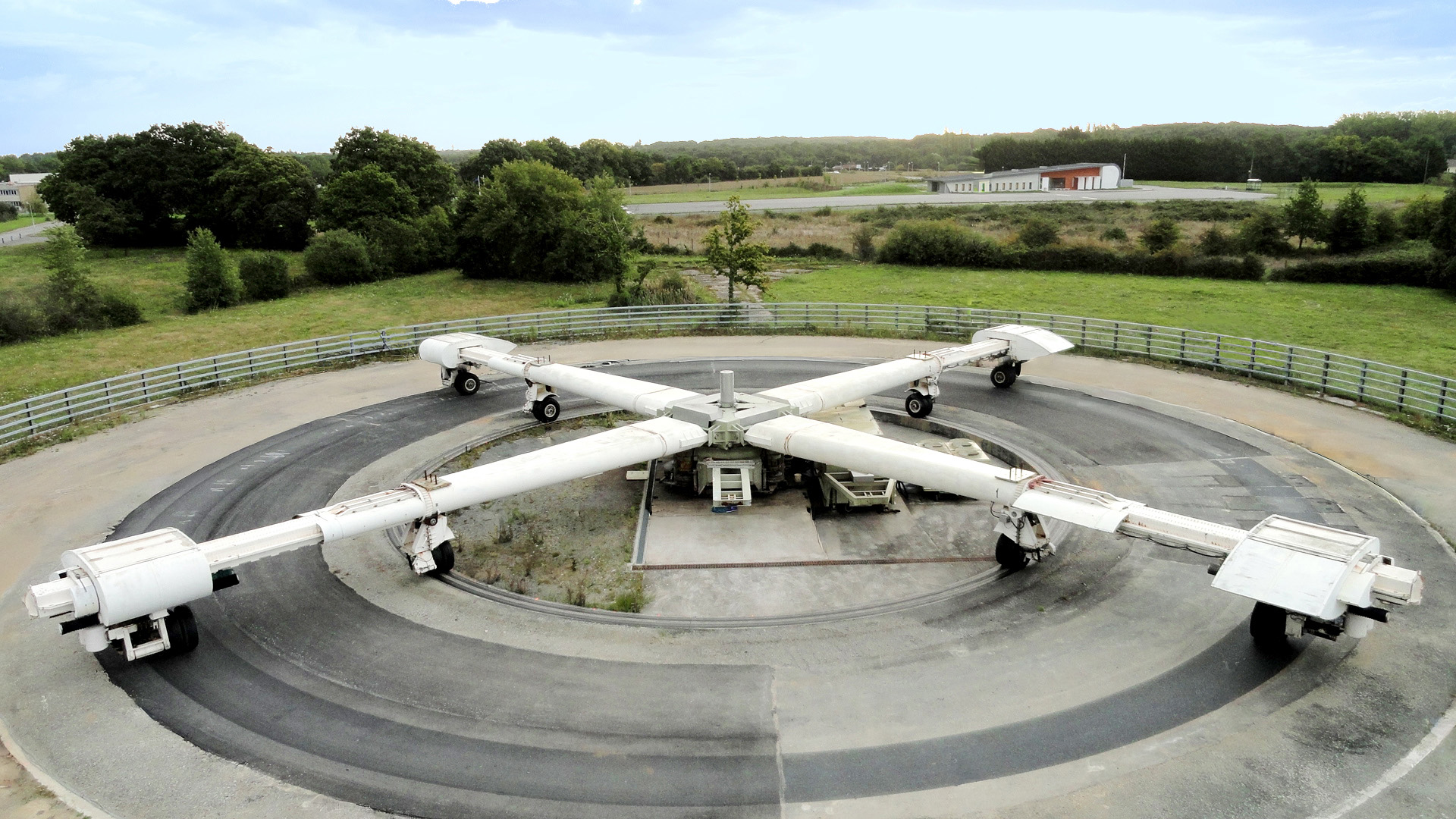
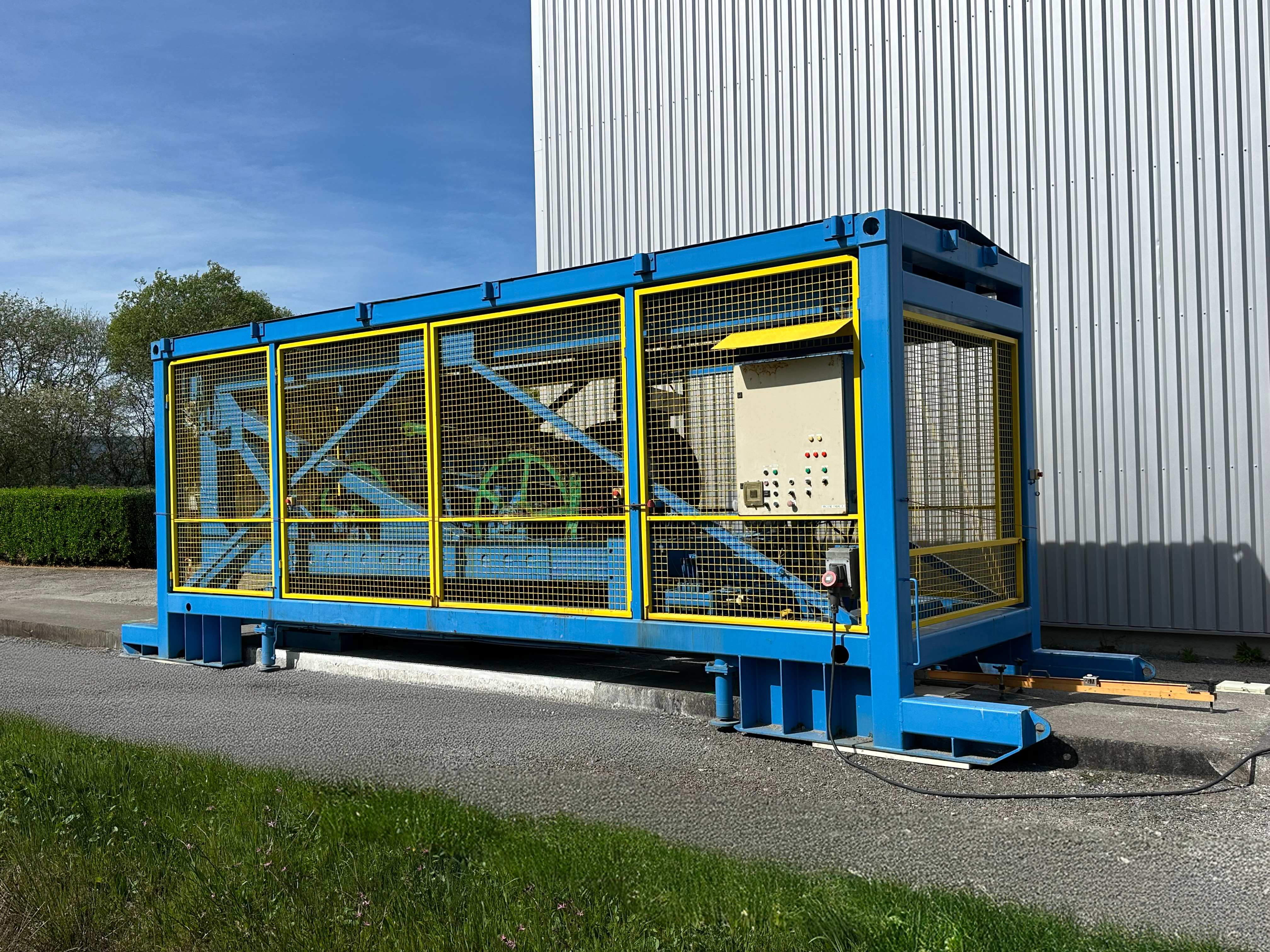
To this end, the laboratory has complementary large-scale experimental facilities: a fatigue carousel dedicated to road structures, as well as two smaller linear traffic simulators (or accelerators) known as FABAC machines.
In parallel, LAMES develops advanced modelling tools, including finite element codes and semi-analytical software specifically designed for infrastructures, such as ALIZE-LCPC, ViscoRoute and ViscoRail.
The main topics addressed concern the degradation mechanisms of infrastructures — fatigue, cracking, interlayer interface behaviour, freeze-thaw cycles — as well as the under-traffic evaluation of road materials and innovative structures, and pavement design methods for road and airport applications.
Accelerated Testing — Carousel & FABAC
Fatigue Carousel
A circular device that applies millions of load passes to full-scale road structures within just a few months, essential for validating innovations in road engineering.
FABAC Machines
Two linear traffic accelerators complementing the carousel, enabling smaller-scale tests for studying local behaviour and validating numerical models.
Accelerated tests allow the long-term behaviour of pavements under real loads to be studied in significantly reduced timeframes (typically 3 to 6 months). Essential for validating road innovations and advancing research, they enable the study of degradation mechanisms, model validation and the development of inspection methods.
Standard study areas
- Testing of new materials and new structures
- Validation of pavement design models
Extended testing capabilities
- Maintenance and reinforcement techniques
- Evolution of surface characteristics
- Structures for public transport
- Road surface elements under traffic
- Evaluation of inspection methods
- Innovative infrastructures (charging, energy)
Accelerated tests help address the needs of future infrastructures: improved durability and resilience to climate change, development of more resource- and energy-efficient materials, and adaptation to new vehicles (electric, autonomous).
Recently Developed Calculation Tools
Recently, the laboratory has developed finite element codes to model:
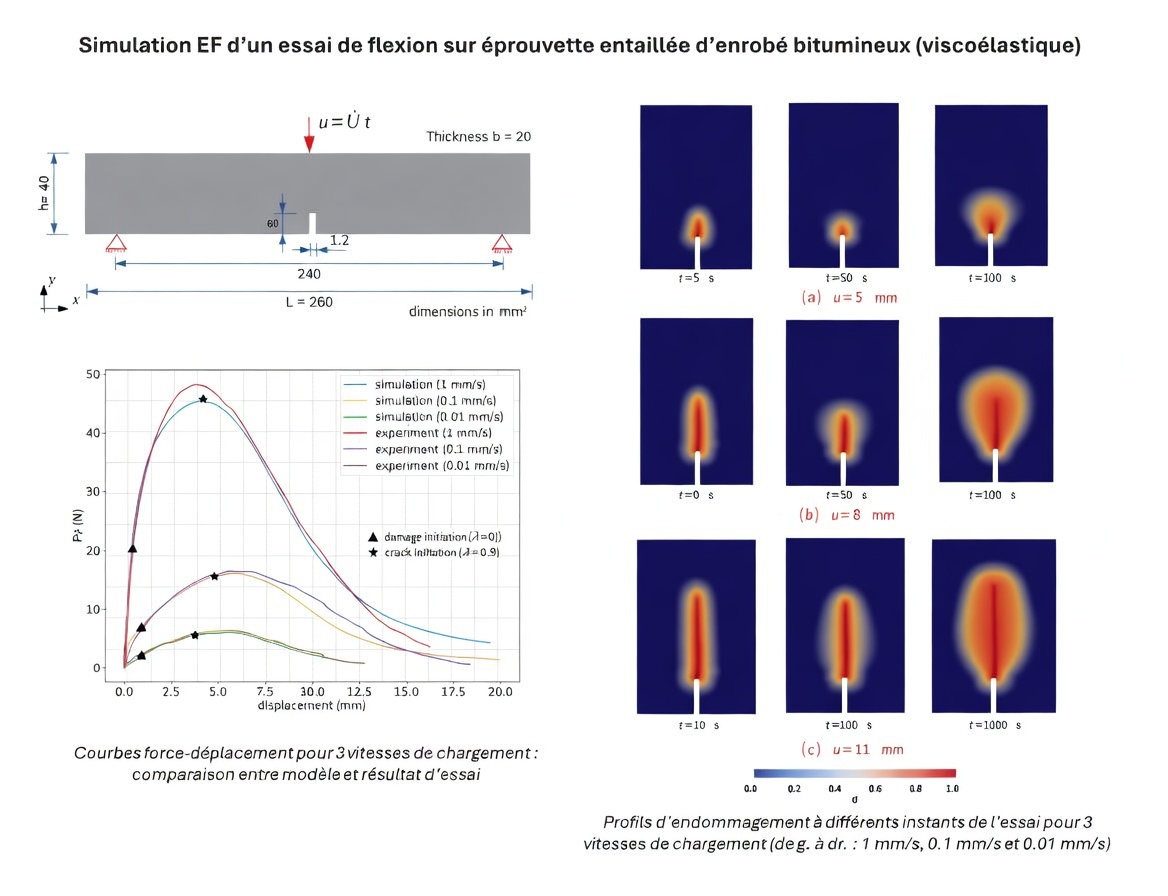
Cracking behaviour of bituminous asphalt structures (viscoelastic)
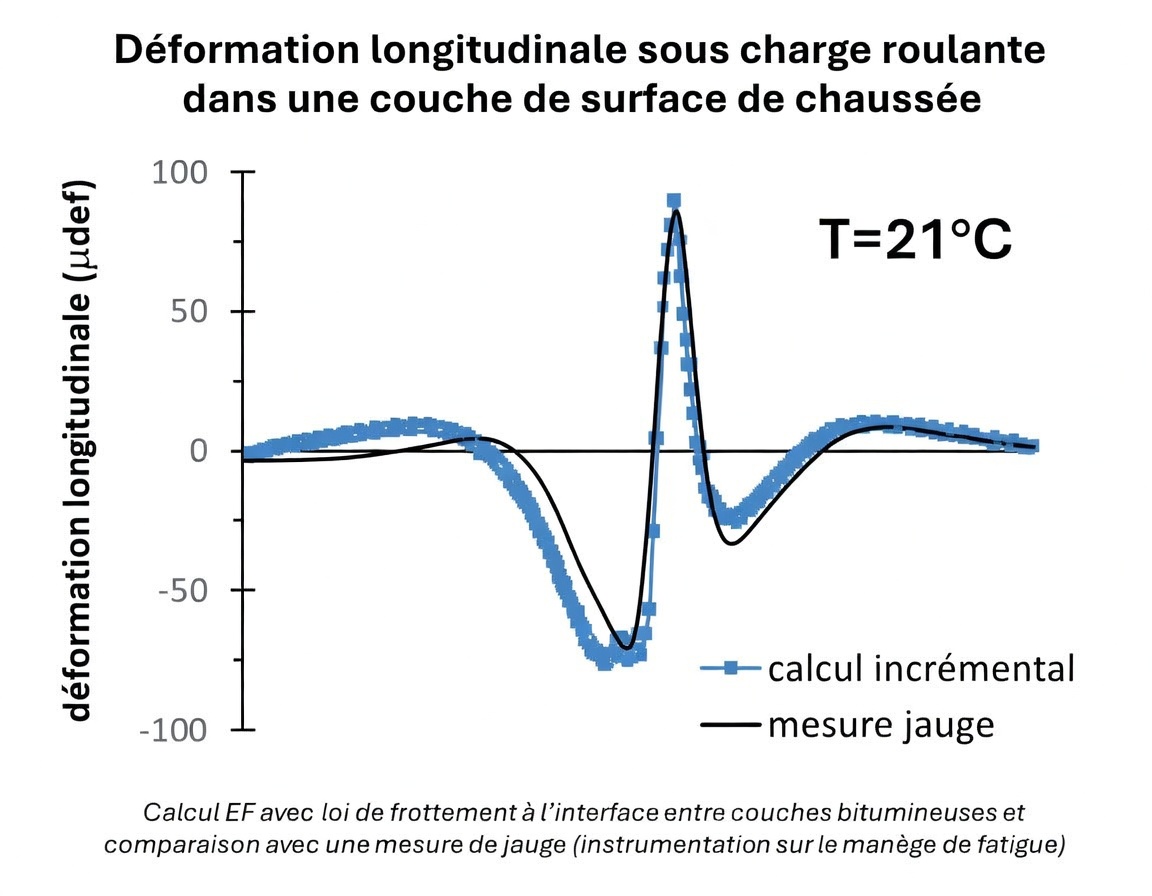
Frictional interface behaviour between bituminous layers — applied to the durability of surface courses
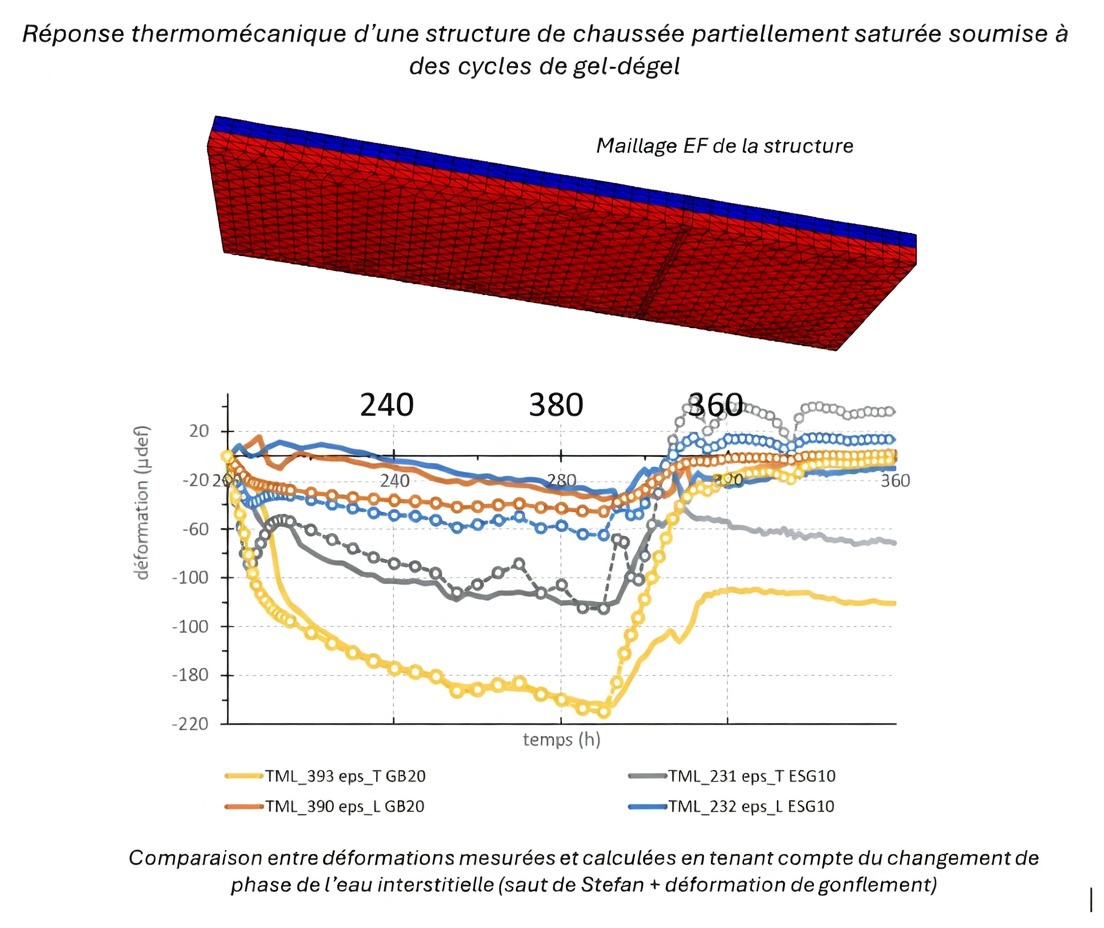
Thermomechanical response of partially saturated bituminous mixes subjected to freeze-thaw cycles
These developments complement existing semi-analytical software specifically dedicated to the design of transport infrastructures: ALIZE-LCPC, ViscoRoute and ViscoRail.
Illustrations
Research Projects
Explore LAMES Projects
Below you will find the LAMES research projects related to the theme Mechanical Behaviour: Modelling and Experiments — covering pavement fatigue, numerical modelling, accelerated testing and pavement design.